
Curriculum Support: Whittling in Grade 5 with Anastasia Sinclair
Grade 5 Whittling
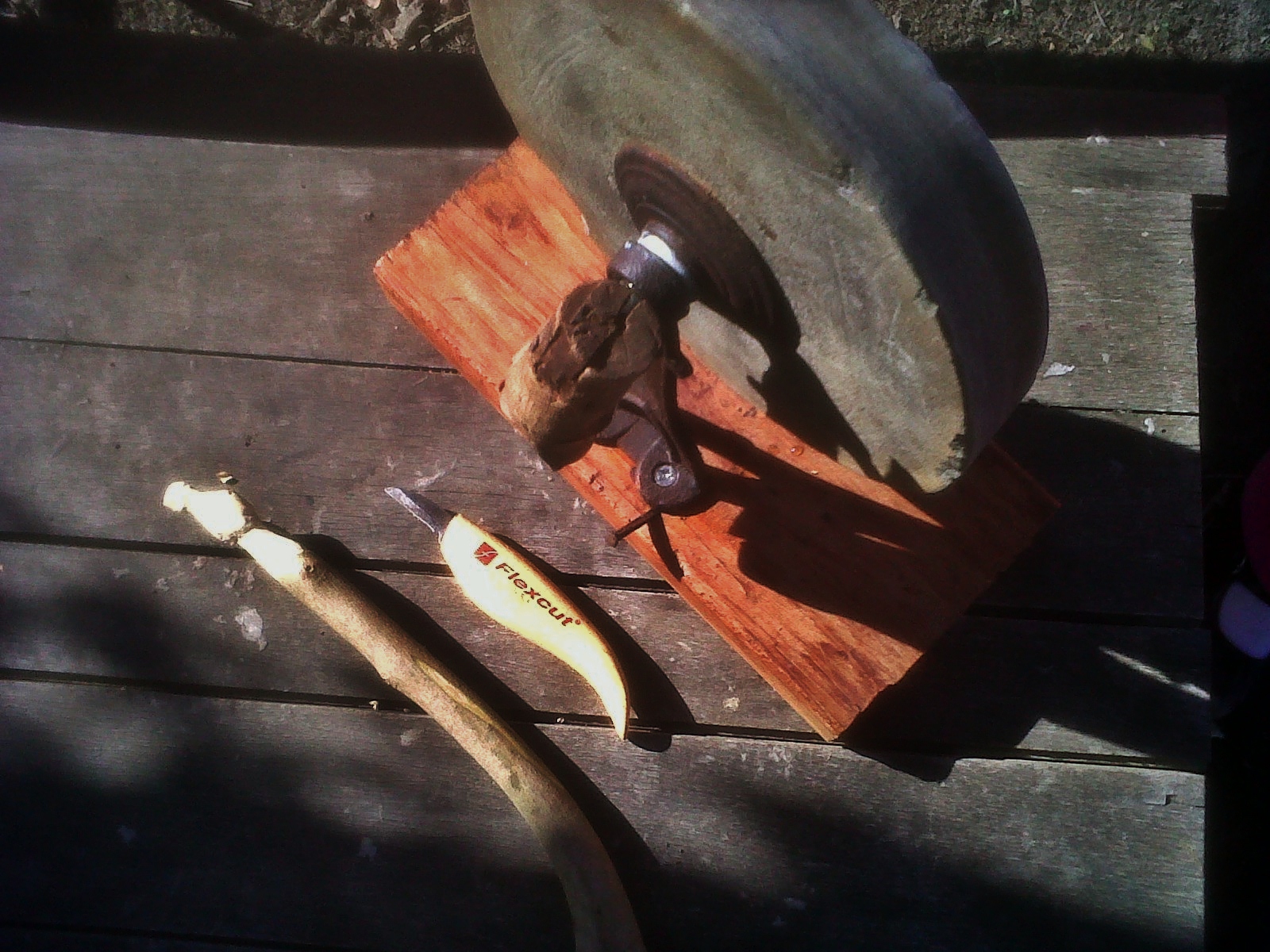
Whittling Knife, Sharpening Wheel and Olive Branch
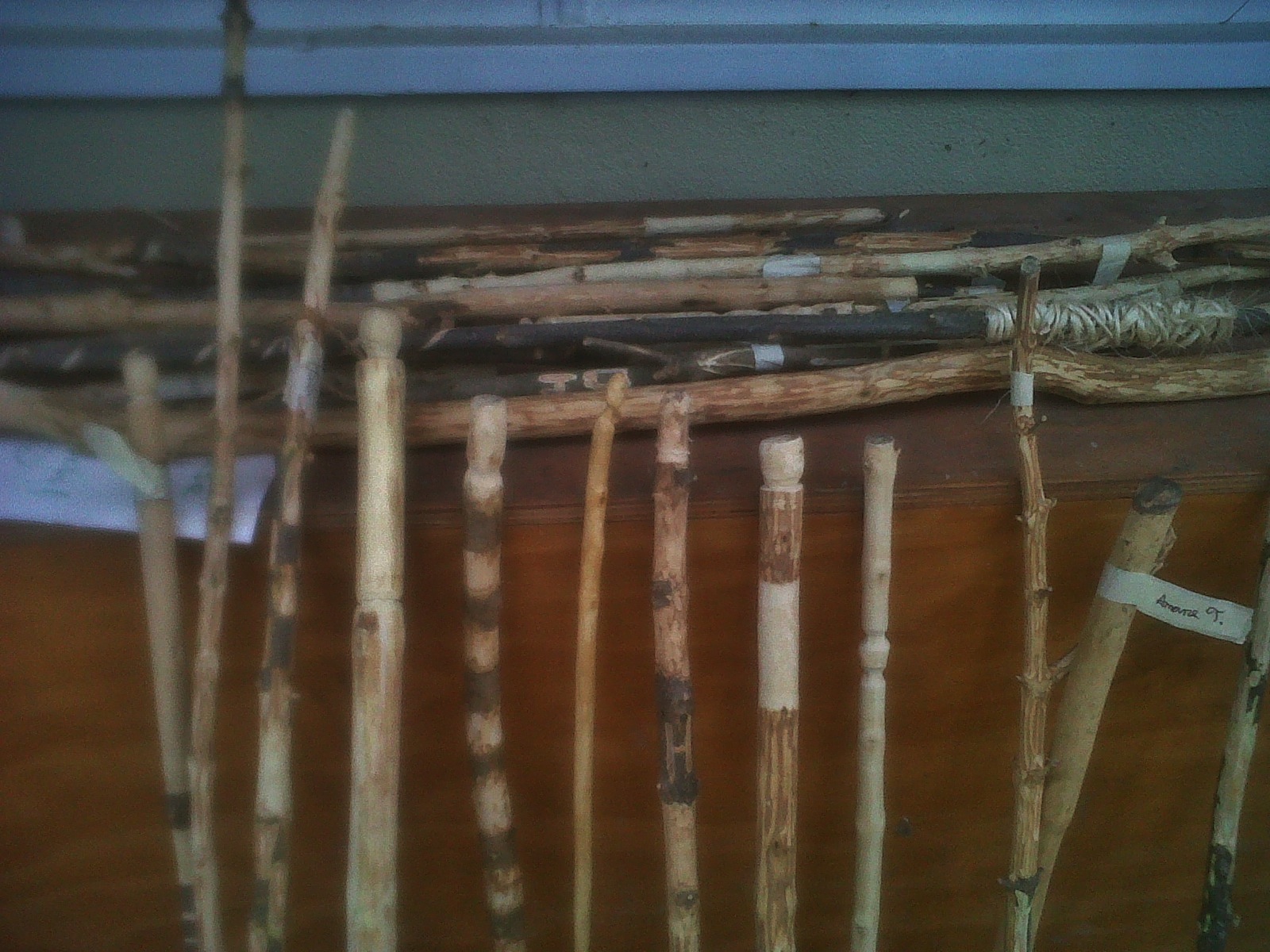
Walking Sticks
Grade 5 is a great year to begin whittling. Order some wooden handled knives (one per student) and a sharpener, a little bit of practice balsa wood, and you are ready to begin whittling whatever wood suits your fancy. For grade 5 I harvest green olive wood from the young shoots off of very old olive trees at a nearby farm. The students whittle walking sticks with attention to making a “knob” somewhere on the stick. They can then use these walking sticks on a long hike back to the farm where the wood was grown and visit the trees. Because the students are studying Greek culture in grade 5, and the olive is sacred, it is a nice to work with this plant. But I also feel that it is important to use local materials, so it is ideal to find a wood that is grown locally. The important aspect of garden-based wood working, and especially whittling is that the students have a relationship to the material. It is better if they can observe the material they are using growing in its natural environment, still better if they can grow it and/or harvest it themselves. Whittling a piece of wood from the store does not carry the same understanding of the material. Hazel nut would be a wonderful tree to grow and harvest for whittling.
Students in middle school love to whittle! It would also be an appropriate activity to do in Grade 6 or at other times in middle school as needed for a project (repairing tool handles, carving a sign).
I sit the students in a circle and talk about tool safety. I am a little graphic with the students about slicing fingers, so they are safe and careful. I do a demonstration and then I give them soft wood and hard wood to practice for one or two classes. Once they show me their technique, I let them choose a walking stick out of the sticks we have harvested. They work at their own pace, and those who finish early (and do a fine job) are allowed to start other whittling projects, perhaps with bone. They love to chat, so sometimes I will tell them a little story which does not require much focus, or we will all work quietly for a while. On nice days we work out in the garden, and sometimes roast some nuts in the oven. On stormy days we work in the class and just sweep up the floor afterwards. At the end of class the students put a name tag of their evolving walking sticks, we bundle them up and store them outside on the cool, shady side of the classroom so they don’t dry out too quickly.
 Waldorf School Gardens