
 A study in Sustainable Living at Waldorf School of the Peninsula in Mountain View with Anastasia Sinclair, Gardening Teacher
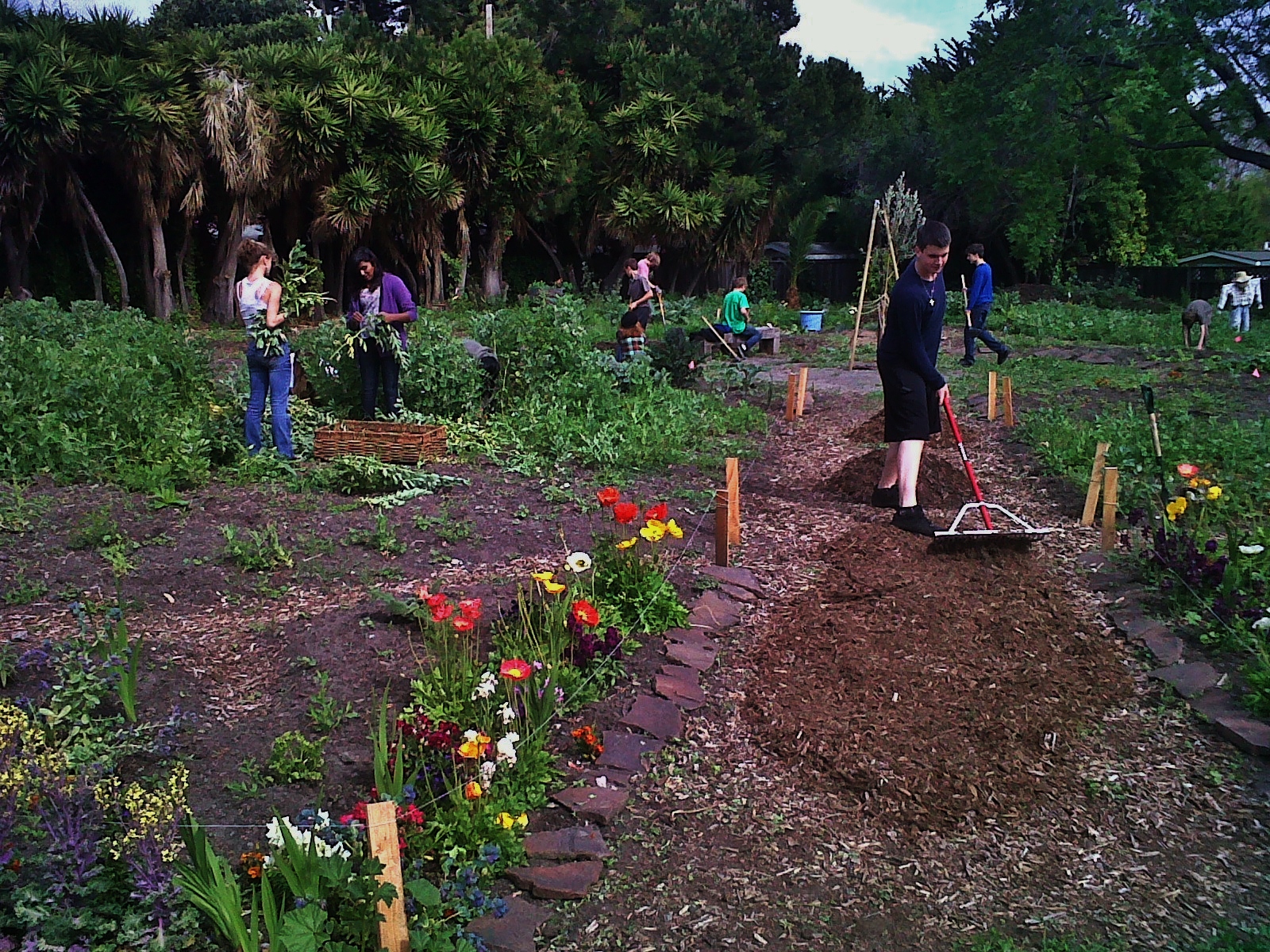
For one week in April, the 9th grade class at the Waldorf School of the Peninsula in Mountain View spent their schools days doing hands-on learning about how to be more sustainable in Silicon Valley. Here is an account of their week in their own words:
“Standing where the concrete ends, the grass cool on my bare feet, I look out on the garden and think of how much I’ve learned and done in the past week; rich earth teeming with enough life to grow a good amount of food. Sturdy young plants stretching towards the sky, taking in water, sunlight and minerals, converting mere elements into a solid, nourish meal. Fresh paths, weaving throughout the plant beds, weeded and cleaned up.”-Jenine Y.
“Digging, shoveling, and planting, all things I learned during a week filled with hands-on agricultural education. The freshmen of WHSP (Waldorf High School of Peninsula) stopped their normal weekly schedule to focus on the art and science of sustainable agriculture and Permaculture. Exploring it not only led to weeding and basic gardening; studying sustainable, environmental-friendly architecture and how one of the largest companies, Google, was incorporating Permaculture into their buildings were all included in this Agricultural Week.
“The week started with just clearing up the school garden of weeds and laying out a path of mulch. We used mulch because it killed off weeds and kept the heat and moisture required by the plants entrapped. At the end of the day, almost all the undesirable weeds left no trace on the garden.
“The next day went on as similar, adding the planting of trees and vegetables. On a mound, we planted squash, beans, and corn. They were called the Three Sisters in honor of the Iroquois whose legend gave us the knowledge. The corn provided the beans a natural pole to support the bean vines. In turn, the beans’ vines reinforced the corn from strong winds. Beans also grabbed nitrogen into their roots, where it fertilized the soil. The squash acted like living mulch. It prevented moisture to evaporate and petty weeds to grow.”-Sean Lee
“On Friday we biked to the Google offices near Shoreline and met with their director of real estate and services. We took a tour of part of the Google campus. Special highlights included their rooftop garden, electric car charging stations, and free snack bar. We also learned a great deal more about building materials that are free of harmful chemicals, such as VOCs. Google has a whole team that studies this stuff and is focused on keeping Google conscious about the environment.”
-Jack Pelose
“The week was quite invigorating, and our class strengthened its bonds with each other through the work and learning experiences we shared. The garden at school grew with all of the work and care that was put into making it flourish. We learned so much more than if we had been in a classroom the whole week, and the importance of agriculture in our everyday lives was not ignored. I know that I have started to think about where my food comes from, and I am inspired to start my own backyard garden. I think that this class was a fun way to learn about agriculture and all it affects, as we will need to learn to keep our food more local in the future.”-Jenine Y
“This age, is an age of change. The world is slowly widening their gaze beyond only human desires and Globalization to include sustainability and resource conservation. This week quickened the process. It showed that the earth is a living organism and we, humans, are just a small part of it. But we are also the biggest threat and are just realizing the path to destruction we put the whole world into. Permaculture is not a perfect system, but it is a system that incorporates the environment around us into great consideration.”
-Sean Lee
 Waldorf School Gardens